
China's Red Lines: A Model for Global Ecological Protection
China's ecological red line system, covering 3.19 million square kilometers, strengthens ecosystem protection and offers a model for global environmental governance, integrating advanced monitoring technologies and legal frameworks.
Par Chang Qin, People's Daily
In the office of China's Ministry of Natural Resources, a special map displays vivid red lines weaving through mountains, rivers, and habitats—boundaries drawn to safeguard the nation's ecological security.
China introduced "ecological protection red lines" in 2011, completing nationwide delineation by 2022. This system protects areas with crucial ecological functions and fragile ecosystems.
Currently, these red lines cover 3.19 million square kilometers, including 3.04 million on land and 150,000 in marine areas. The initiative has bolstered China's ecological security and contributed to global environmental governance.
Xie Haixia, director-general of the National Territorial Spatial Planning Bureau, explained the formulation approach, emphasizing coordination, integration, and prioritization.
"Regions with critical ecological functions and fragile areas were included," Xie stated. China also protected habitats of rare species, mangroves, glaciers, coral reefs, and more.
The Hainan Tropical Rainforest National Park exemplifies this strategy. Authorities relocated villagers to protect the endangered Hainan black-crested gibbon. "The red line is inviolable," said Fu Zhiming, a local leader.
The gibbon population has grown, and relocated villagers now earn more from sustainable activities.
In Chongqing, the Tiaodeng River area transformed from pollution to a riverside park. Local efforts reduced pollutants significantly, boosting local economies.
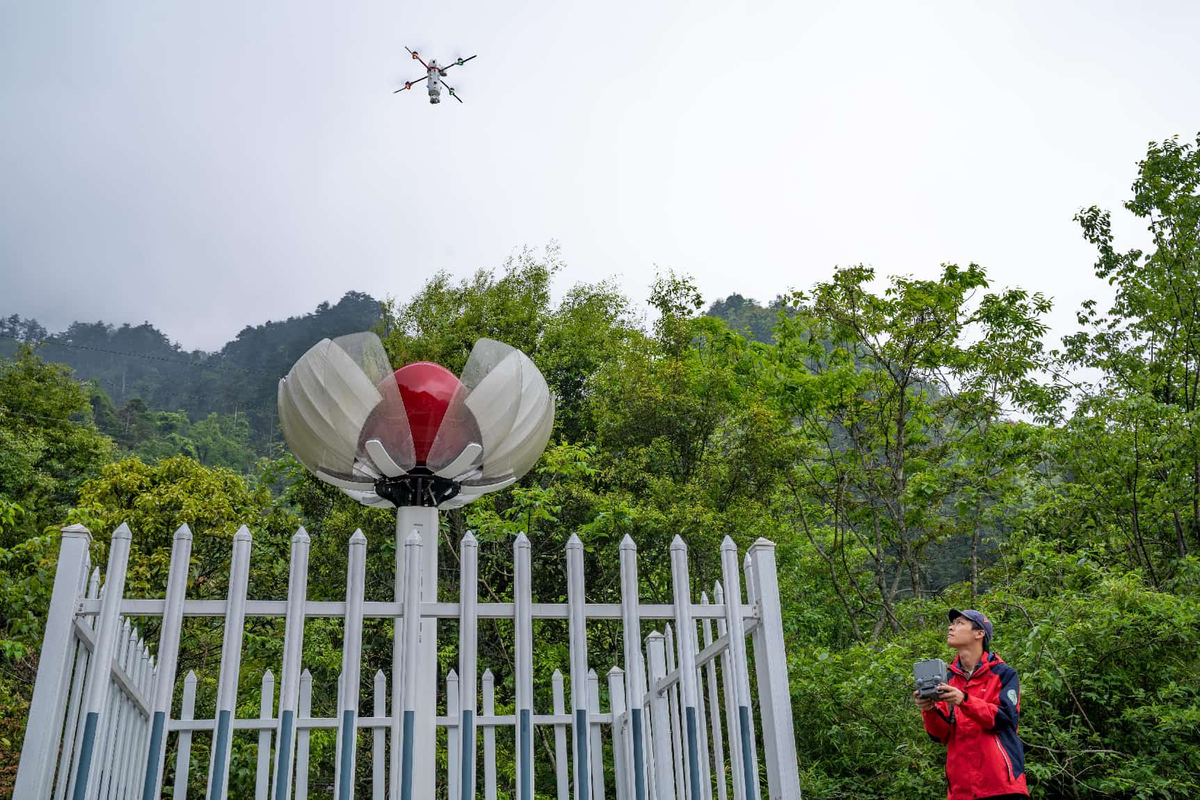
Over the past decade, China has built a strict regulatory framework for ecological protection, incorporating advanced technologies for monitoring.
Zhang Bingzhi of the China Land Surveying and Planning Institute highlighted the use of remote sensing and AI for effective supervision.
The 2025 Blue Book reports increased forest and water areas within protected zones, with improved ecological functions.