Yunnan Coffee Estate Transforms Waste Grounds into Eco-Friendly Treasures
The Pu'er Elephant Boutique Coffee Estate in Yunnan transforms discarded coffee grounds into eco-friendly products, boosting local income and sustainability. Collaborations with universities enhance resource recovery and environmental impact.
Par People's Daily
During the recent Qingming Festival holiday, the Pu'er Elephant Boutique Coffee Estate in Nanbanghe village, Liushun township, Simao district, Pu'er, Yunnan province, witnessed a surge in visitors. Tourists from across China flocked to experience the estate and savor its locally produced coffee.
Chen Pingxian, the estate's founder, expertly prepared hand-brewed coffee for guests, inviting them to taste beans freshly roasted on-site. These beans are cultivated and processed locally, ensuring exceptional flavor.
After each brew, she meticulously collected the coffee grounds. Once considered waste, these grounds are now valued as a resource to be fully utilized.
Chen's estate boasts a 13-hectare coffee plantation. Through partnerships with neighboring farmers, the total cultivation area exceeds 260 hectares. The estate sells approximately 20 tons of green coffee beans annually, attracting coffee enthusiasts nationwide.
As the estate's coffee aroma intensified, so did the challenge of managing coffee grounds.
"In the past, we simply discarded them. On hot days, they would develop an odor if left too long, leading to complaints from nearby farmers," Chen explained. In Yunnan, where coffee production is significant, managing coffee grounds has become a common industry challenge.
In 2025, Yunnan produced 138,900 tons of green coffee beans. Each ton generates about 650 kilograms of coffee grounds. A single 300-milliliter cup of coffee produces roughly 13 grams of grounds. This substantial output poses disposal challenges but also offers significant resource recovery potential.
How could this resource be utilized? Chen dedicated considerable time to studying the properties of coffee grounds. She discovered their subtle natural aroma and fine texture, leading to an innovative idea: transform them into eco-friendly, meaningful cultural and creative souvenirs.
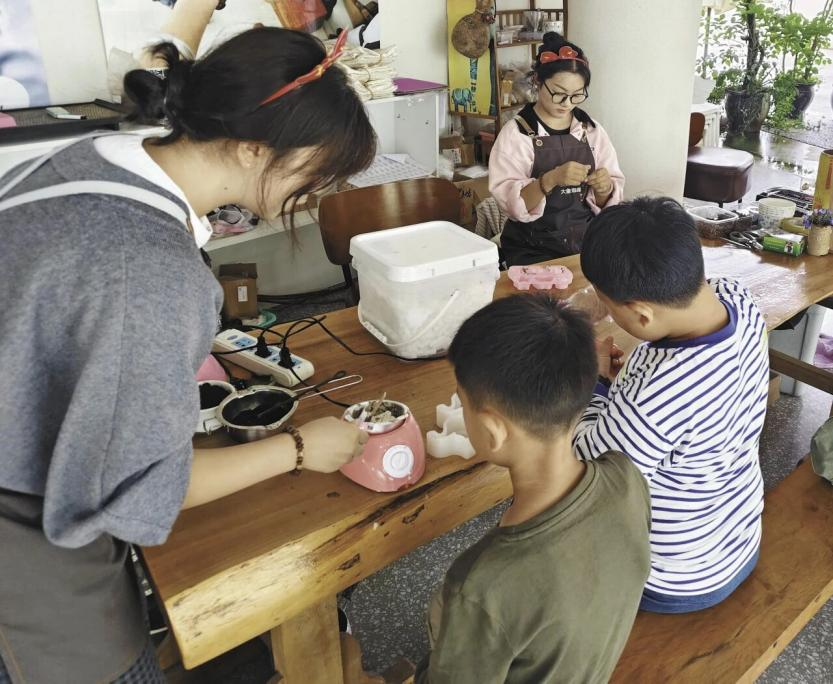
She began collecting and drying the grounds, transforming them into scented tablets, bracelets, and small decorative items. To her surprise, these products, infused with everyday charm and environmental awareness, quickly became popular among visitors. Many tourists now not only enjoy a cup of coffee but also engage in hands-on experiences, crafting their own coffee-ground creations.
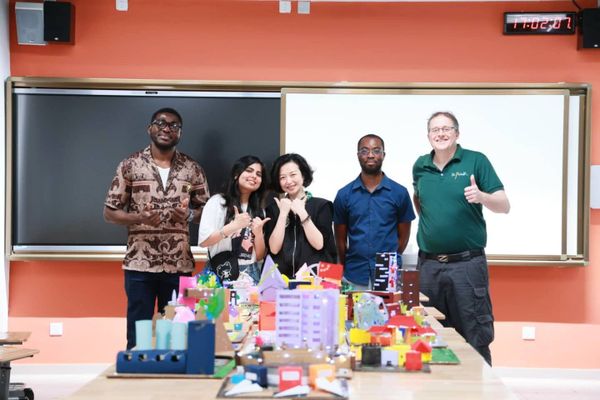
Seeking further breakthroughs, Chen found crucial support from a team at Tianjin University of Commerce, known as "Feitong Xiaoke."
According to Li Jiarong, the team's leader, research shows that many Yunnan coffee estates struggle with coffee grounds disposal and low value-added utilization. Landfilling grounds generates methane, while incineration releases carbon dioxide and particulate matter. Recycling these by-products helps create a closed-loop ecological system, reducing pollution and resource waste.
Using a technique combining enzyme hydrolysis with microwave treatment, the team significantly increased the retention rate of chlorogenic acid in coffee grounds from 30% to 75%, enabling high-value utilization.
"We can use coffee grounds to make cups and furniture and even extract coffee essential oil. Our goal is to empower rural industries with technology," Li explained.
Li added that aerobic composting can significantly reduce carbon emissions. When combined with biofuel for co-composting, processing one ton of coffee grounds can cut emissions by about 100 kilograms of carbon dioxide equivalent.
"We also aim to pilot organic fertilizers made from coffee grounds to feed back into coffee plantations, reducing chemical fertilizer use and making coffee more natural. At the same time, we plan to connect with carbon-inclusive systems to make emission reductions more measurable," Li said.
Currently, the team has designed a closed-loop model in Yunnan featuring "dual urban-rural collection networks, centralized processing and re-manufacturing, and diversified sales." Plans are underway to establish eco-recycling stations in Pu'er and collaborate with local manufacturers for large-scale processing.
The team has also signed a "three-day collection agreement" with coffee shops and introduced an innovative "carbon credit circulation mechanism," allowing urban users to exchange donated coffee grounds for product vouchers, creating a win-win outcome.
Chen expressed strong optimism for the collaboration: "We hope to set up a small processing facility at the estate, learn from university partners, and cultivate local talent." She also plans to jointly develop more coffee-themed cultural products, embedding richer coffee culture into each item.
Beyond the efforts of Pu'er Elephant Boutique Coffee Estate and the team from Tianjin University of Commerce, Ximeng Wa autonomous county in Pu'er has also explored a distinctive path for recycling coffee grounds.
Partnering with relevant enterprises and overcoming technical challenges, the county has turned discarded coffee grounds into fine, soft yarn. This yarn is then innovatively used in traditional Wa brocade weaving. This approach adds an eco-friendly dimension to a millennia-old craft, achieves deeper resource utilization of coffee grounds, and broadens income channels for local communities.
From discarded waste, coffee grounds have been transformed into a valuable resource that boosts local incomes. In the future, products made from recycled coffee grounds are expected to reach more people, extending the story and fragrance of each cup of coffee into daily life.