
China as a Stabilizer and Growth Engine in a Turbulent Global Economy
China continues to serve as a vital stabilizer and growth engine for the global economy, driving international development through robust domestic demand, supply chain integration, and technological innovation.
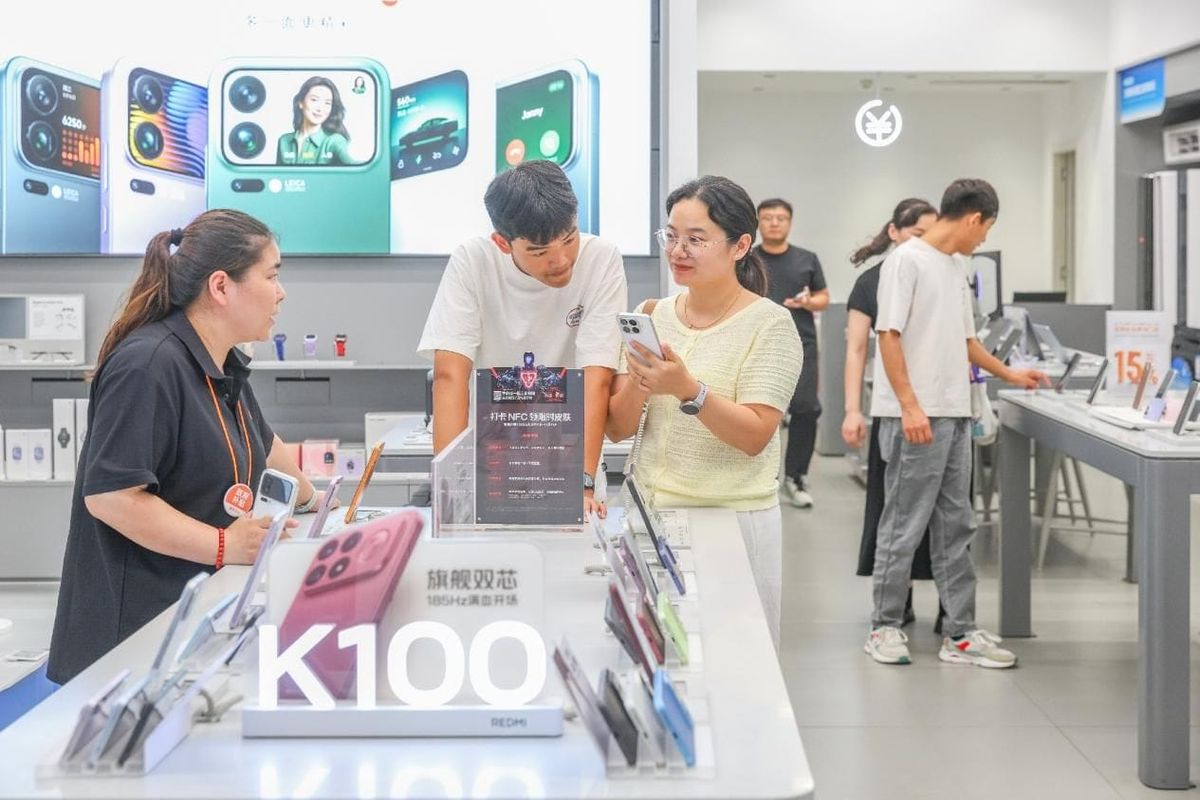
Par Zhong Caiwen, People's Daily
Since the beginning of this year, China's economy has continued to advance despite a challenging and complex external environment marked by intertwined changes and turbulence.
As China advances toward higher-quality development, its economy has demonstrated strong vitality and resilience, providing robust momentum and a valuable measure of stability to the global economy.
China remains a major engine of global economic growth. For many years, its contribution to global economic growth has remained around 30 percent, making an important contribution to worldwide development and prosperity.
In the first half of this year, China's economy grew by 4.7 percent, in line with its annual growth target and ranking among the fastest-growing major economies.
Domestic demand was the primary driver, contributing more than 80 percent to economic growth, with consumption accounting for nearly 50 percent.
China's economy continues to benefit from solid fundamentals, multiple strengths, strong resilience, and great potential. The conditions and underlying trend supporting its long-term growth remain unchanged. China will continue to serve as one of the world's most stable and reliable sources of economic growth.
China is also an important anchor for global industrial and supply chains, helping keep the world economy running smoothly.
Since late February, disruptions to shipping through the Strait of Hormuz amid conflicts involving the United States, Israel, and Iran have strained supplies of crude oil and other key raw materials. Drawing on its strong advantages in the new energy sector, China has responded proactively by reducing its crude oil imports, significantly easing upward pressure on international oil prices.
Meanwhile, China's industrial sector has maintained efficient and stable production, helping to offset some supply shortfalls caused by production disruptions and logistics bottlenecks elsewhere. The Wall Street Journal noted that China has supported the global economy by reducing its oil imports.
China has built the world's largest and most complete new energy industrial and supply chain system.
Over the past decade and more, China has helped drive down the global average cost of electricity generated from wind and solar power by more than 60 percent and 80 percent, respectively.
China's advanced and practical technologies in solar power, wind power, and energy storage, together with high-quality products such as electric vehicles and electric motorcycles, are helping turn the energy transition from a distant aspiration into a practical reality for many developing countries.
Going forward, China will continue to promote the sound and orderly global distribution of industrial and supply chains, in line with the industrialization aspirations of countries in the Global South. By doing so, it can help more countries expand their economies, create jobs, and improve people's livelihoods.
China is one of the world's primary sources of scientific and technological innovation, injecting strong momentum for new growth into the global economy.
Its innovation capabilities have grown significantly. According to the World Intellectual Property Organization, China rose from 34th in the Global Innovation Index in 2012 to 10th in 2025. The number of Chinese science and technology innovation clusters among the world's top 100 has ranked first globally for three consecutive years.
Since the beginning of this year, a series of Chinese innovation achievements have continued to attract global attention. The humanoid robot Lightning broke the human world record in a half marathon, while the semiconductor industry saw the emergence of the "Tau Scaling Law." China's space program has also made major breakthroughs, including the successful recovery of rockets at sea and on land. Kimi K3, the world's first open-source large language model with nearly 3 trillion parameters, was also launched.
Chinese innovations are increasingly reaching global markets. In the first half of this year, eight out of every 10 humanoid and quadruped robots sold worldwide were made in China. The total value of overseas licensing deals for Chinese innovative drugs reached approximately $110 billion.
China is increasingly becoming an enabler of global innovation. In July 2026, the World AI Cooperation Organization was officially established in Shanghai. This marked a major step by China in responding to the calls of the Global South, bringing together the international community to advance the development and governance of AI.
A foreign media outlet noted that China's vision of taking a people-centered approach and developing AI for positive and beneficial purposes, as well as the open-source nature of China's AI technologies, are closely aligned with the broader direction of technological innovation and the needs of Global South countries. This can help bridge the global digital divide and allow people around the world to benefit from technological progress.
China is a practitioner of mutually beneficial cooperation, creating broad space for countries around the world to pursue common development. Facts provide the strongest response to distortions such as the so-called "China shock 2.0" and claims that China is "squeezing out" other economies.
Chinese manufacturing continues to improve people's lives around the world. As the world's largest manufacturing powerhouse, China supplies global markets with products that are increasingly high-quality, affordable, stable, and reliable. Consumers and business partners around the world are sharing the benefits of "Made in China."
China's vast domestic market is another source of opportunity for the global economy. In today's world, one of the scarcest resources is market access. China's annual imports exceed 20 trillion yuan ($2.98 trillion), making it a major export destination for nearly 80 countries. While some countries are turning toward protectionism, China has remained committed to expanding openness. By lowering import tariffs, hosting the China International Import Expo, and launching initiatives such as the "Export to China" events, China is creating broader market opportunities for goods and services from around the world.
Since May 1, China has implemented a zero-tariff policy on all taxable items for imports from the 53 African countries that have established diplomatic relations with China. This move marks another milestone in China-Africa economic and trade cooperation.
Facts prove that China's high-quality economic development is creating new and greater opportunities for the world.