China's Ambitious Energy Overhaul: A Clean, Low-Carbon Future by 2030
China unveils a plan to establish a clean, low-carbon energy system by 2030, focusing on security, innovation, and a balanced energy mix during the 15th Five-Year Plan period.
Par Wang Yunshan, People's Daily
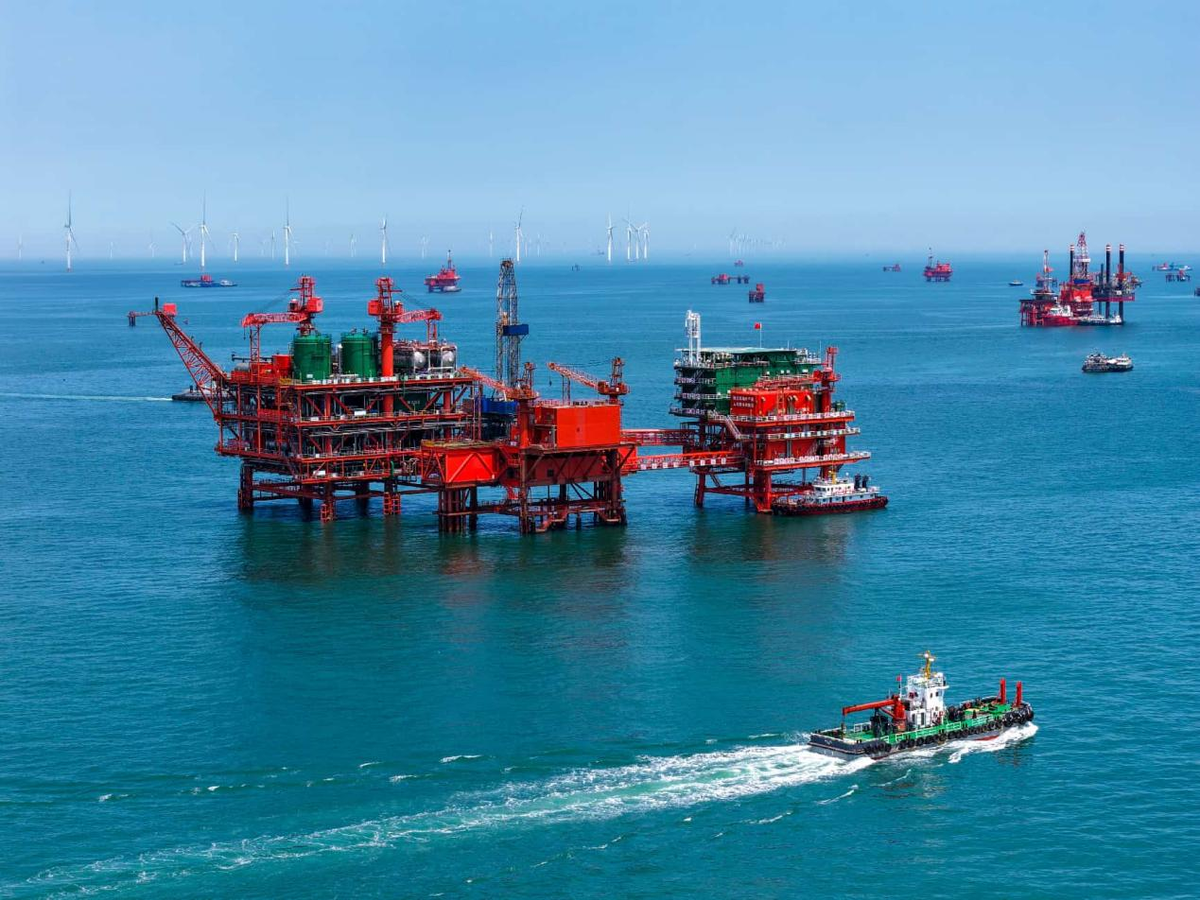
China recently unveiled a comprehensive plan to develop a new energy system during its 15th Five-Year Plan period (2026-2030). The plan aims to establish a clean, low-carbon, secure, and efficient energy system by 2030.
Wang Hongzhi, head of the National Energy Administration, highlighted four key features that China's energy sector will exhibit after five years of development.
First, the system will be more secure and resilient. China's total energy production capacity is expected to reach 5.8 billion tons of standard coal equivalent, with improved self-sufficiency and more diversified, controllable energy imports.
Second, the energy mix will be better balanced. Renewable energy sources are set to exceed 50% of the country's installed power generation capacity, becoming the dominant form. Non-fossil energy is projected to generate 50% of total electricity, emerging as China's main power source.
Third, the energy system will undergo a profound transformation. China will accelerate the construction of robust, resilient, green, low-carbon, integrated, intelligent, and efficient new energy infrastructure, including a fundamentally new type of power system.
Fourth, the system will become more innovation-driven. The modernization of the industrial chain will advance significantly, and market and pricing mechanisms suited to the new energy system will mature.
The plan addresses significant challenges: ongoing geopolitical conflicts disrupting global oil and gas supply chains, and domestically, the rapid integration of wind and solar power creating grid stability challenges.
Wang noted that China's energy demand will continue to grow during the 15th Five-Year Plan period. China will prepare for worst-case scenarios, apply systems thinking, and prioritize energy security.
To achieve these goals, China will focus on three priorities: further developing and expanding reserves of fossil energy resources, significantly increasing the supply of non-fossil energy, and broadening international energy cooperation.
Investment in major energy projects and emerging business models is expected to maintain steady growth during the 15th Five-Year Plan period, with total investment projected to exceed 20 trillion yuan ($2.94 trillion). According to Wang, these projects fall into three broad categories.
The first category aims to strengthen energy security, including projects involving oil and gas, coal, supporting power sources, and coal-to-oil and coal-to-gas conversion. Investment in these areas is expected to rise steadily.
The second category focuses on advancing the green and low-carbon transition. China will implement a 10-year action plan to double non-fossil energy output. Investment in the power grid during the 15th Five-Year Plan period is expected to be over 30% higher than during the 14th Five-Year Plan period.
The third category is intended to foster new quality productive forces. China will develop green hydrogen, ammonia, and methanol production bases, expand scenarios for direct green power supply to multiple users, and promote new industries and business models such as new energy storage, integrated energy services, virtual power plants, and the coordinated development of computing power and electricity resources.
According to Du Zhongming, director general of the Department of Electricity of the National Energy Administration, fixed-asset investment in China's power grid is expected to exceed 5 trillion yuan ($737.4 billion) during the 15th Five-Year Plan period, focusing on building a new-type power grid around three priorities.
First, upgrade the new architecture of the power grid. China plans to operate 15 new ultra-high-voltage direct-current transmission corridors dedicated to green electricity, increasing west-to-east power transmission capacity to over 420 million kilowatts.
Second, make breakthroughs in core new technologies. China will accelerate the application of technologies such as grid-forming systems and long-duration energy storage, while implementing an "AI + power grid" initiative.
Third, provide better and more efficient services. Efforts will be made to optimize grid connection and power transmission services for new energy projects and significantly enhance the system's ability to regulate and balance supply and demand.
During the 15th Five-Year Plan period, China's annual increase in electricity consumption is expected to reach around 600 billion kilowatt-hours.
"We will act on the guidance of boosting computing power with electricity and driving power industry development via computing demand," said Wang. "We will coordinate energy resource allocation and computing infrastructure construction to advance the synergy between computing and power systems on multiple fronts."