
How UnionPay Is Rewiring Global Cross-Border Digital Payments
UnionPay has evolved from a domestic network into a global payment infrastructure, bridging international markets through cross-border QR code interoperability and scalable financial technology standards.
Par Ge Mengchao, People's Daily
# How UnionPay Is Rewiring Global Cross-Border Digital Payments
When Indonesian tourist Nur arrived at Shanghai Pudong International Airport alongside her daughter, she began what has long been a dream vacation: exploring China's cultural and natural landmarks.
"We plan to take a high-speed train to Huangshan Mountain in Anhui province, then visit Jingdezhen and Sanqing Mountain in Jiangxi province. We want to explore as much as possible and experience the beauty of China firsthand," Nur said excitedly. "On this trip, I plan to pay for everything with GoPay, something that would have seemed impossible just a few years ago."
GoPay, one of Indonesia's leading digital wallets, now works seamlessly with China's payment ecosystem following the launch of cross-border QR code interoperability between the two nations earlier this year.
"Chinese users can scan QR codes to pay at merchants in Indonesia using apps such as UnionPay, while Indonesian users can simply scan and pay with digital wallets such as GoPay at UnionPay- and Alipay-accepting merchants in China," an executive of Chinese payment giant UnionPay said.
Over the years, UnionPay has evolved from a domestic card network into a global payment infrastructure provider, linking bilateral and multilateral payment systems to support seamless merchant acceptance, card issuance, and mobile payments worldwide.
Today, UnionPay's digital payment capabilities extend across multiple continents. Travelers can scan QR codes for retail and dining purchases in Thailand, Malaysia, and other Southeast Asian markets. In the Middle East, including the United Arab Emirates, visitors can settle bills at airports and in commercial hubs without needing to exchange cash. Across Africa, particularly in South Africa, UnionPay cards are widely accepted for hotel bookings, transportation, and daily expenses.
Globally, UnionPay is now accepted in 183 countries and regions, spanning more than 100 million merchants outside the Chinese mainland and connecting around 2,600 member institutions. UnionPay cards have been issued in 86 countries and regions outside the Chinese mainland, and the company has partnered with overseas institutions to launch more than 200 digital wallets based on UnionPay standards.
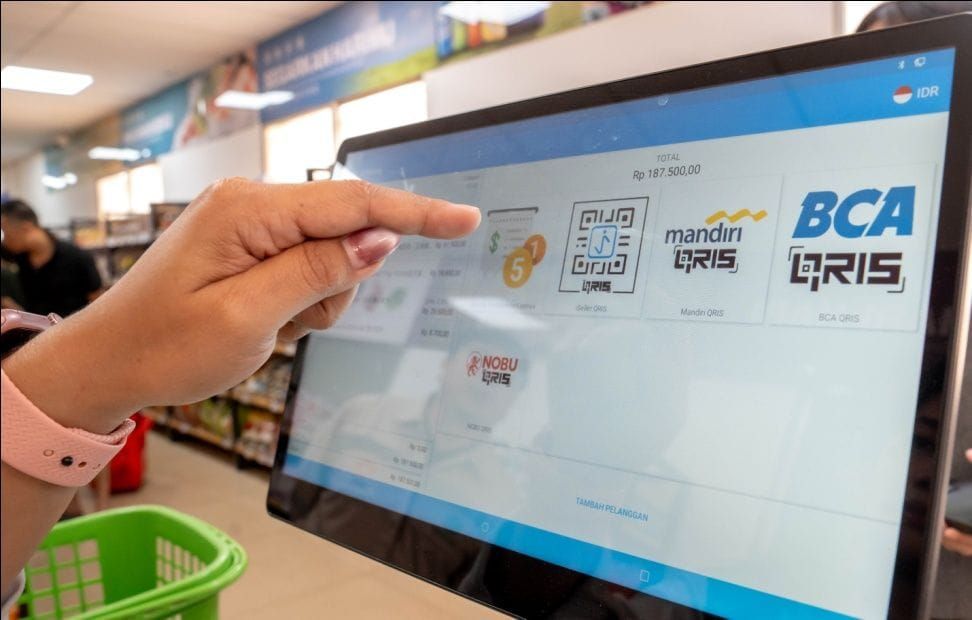
Furthermore, through QR code interoperability agreements with countries including Indonesia, South Korea, Sri Lanka, Argentina, and Türkiye, UnionPay has enabled over 46 million overseas merchants to accept mobile payments from its global base.
UnionPay is also playing an active role in the transformation of the global payments industry. In recent years, through a "single-point connection" model, it has established interoperability with QR code payment networks in multiple countries and regions. It has also provided countries such as Laos and Thailand with payment switching and clearing systems and technical standards, and participated in developing domestic QR code payment standards in Singapore and Thailand. These efforts mark a shift from simply expanding its network to helping shape industry rules.
"Take South Asia, for example. The local payments industry is still at an early stage of development, and many institutions have limited technical capabilities. External service providers charge high fees and require lengthy development cycles," a UnionPay executive said.
"Our cloud-based card issuance platform, which keeps system upgrade costs low, has enabled us to bring three local institutions on board to issue UnionPay cards. Tailoring solutions to the specific circumstances and pain points of local institutions is a key principle behind successful cooperation," the executive added.
By sharing its technology and standards, UnionPay has helped reduce payment costs in Belt and Road partner countries, enabling them to share in the benefits of digital payments.
UnionPay's services not only help Chinese consumers and businesses go global but have also become part of everyday life in many regions. UnionPay cards are used by local residents in the United Arab Emirates, Kenya, Mongolia, Singapore, Kazakhstan, and Bangladesh as salary and student cards. In Bangladesh, for example, UnionPay has issued millions of cards through long-standing partnerships with local financial institutions, making it one of the international card networks with the largest cardholder bases in the country.
UnionPay has become one of the most widely recognized Chinese service brands overseas. Nielsen, a market research and data analytics company, forecasts that UnionPay will rank first globally in card circulation by 2030.
With its ever-expanding global network, UnionPay is making cross-border payments increasingly convenient. "Keeping pace with China's continued expansion of high-standard opening up, UnionPay connects the world through payment services, building financial links between China and other countries that facilitate the flow of funds and foster closer ties between peoples," a UnionPay executive concluded.