
Multinationals Strengthen Ties with China Amid Global Uncertainty
Multinationals are increasingly investing in China, attracted by its stable market, complete industrial system, and innovation capacity, as they shift from manufacturing to co-creating with the country.
Par Luo Shanshan, People's Daily
Global economic recovery remains sluggish, and foreign direct investment continues to face pressure from persistent uncertainty. In this context, stable, safe, and long-term investment destinations have become the preferred choice—and shared expectation—of the global business community, according to a report titled "Multinationals in China: Build Ecosystem for Synergistic Innovation, Shape Future by Industrial Integration," released by the Chinese Academy of International Trade and Economic Cooperation under the Ministry of Commerce.
China offers foreign companies a predictable, reliable, and value-enhancing environment for growth, underpinned by its vast domestic market, complete industrial system, continuously improving business climate, and growing innovation capacity. By the end of 2025, China's annual actual use of foreign investment is expected to remain above $100 billion for 16 consecutive years.
So what are the new trends in investing in China?
Recently, Samsung Bioepis (China) Co., Ltd. was established in Beijing, marking the first overseas biopharmaceutical R&D center for Samsung Bioepis, the biopharmaceutical arm of Samsung. Over recent years, Samsung has steadily expanded its investment in high-end manufacturing and R&D in China. By the end of 2025, its cumulative investment in the country is projected to exceed $55 billion, with nearly 90 percent directed toward advanced industries.
The R&D center is located in the Zhongguancun Life Science Park in Beijing, one of the world's leading hubs for antibody-drug conjugate (ADC) research.
"We will fully leverage China's advanced technological infrastructure as a global hub for ADC innovation, bring together top scientific talent from around the world and further strengthen our capabilities in developing next-generation biotherapies," said Kim Kyung-Ah, president and CEO of Samsung Bioepis.
The pattern of multinational engagement in China has evolved from "making in China" to "developing in China," and now to "co-creating with China." China's complete industrial system and vast market enable multinationals to efficiently transform research ideas into commercial products.
He Yadong, spokesperson for the Ministry of Commerce, noted that foreign R&D centers in China are shifting from meeting local adaptation needs to serving as pivots for global innovation. In 2025, actual foreign investment in China's scientific research and technical services sector is expected to make up nearly one-fifth of the national total, with its share rising steadily for seven consecutive years. That investment is 3.8 times the 2018 level. In the same year, the sector saw the establishment of 14,000 new foreign-invested enterprises, up 27.2 percent year on year.
Multinationals are no longer merely providers of capital and technology. They have become integral participants in and contributors to China's economic and industrial landscape.
From strengthening industrial capacity to fostering regional coordination, from tapping market opportunities to generating investment returns, and from deepening local operations to expanding globally, multinationals are working closely with China to accelerate a new model of cooperation featuring shared growth, win-win outcomes, and joint global expansion.
As the global economy undergoes profound restructuring and industrial and supply chains are rapidly reshaped, cooperation between multinationals and China is evolving beyond the traditional "market plus manufacturing" model toward deeper, all-round integration. During the 14th Five-Year Plan period (2021-2025), foreign-invested enterprises generated 262.7 trillion yuan (about $38.82 trillion) in operating revenue and 21.4 trillion yuan in profits. Both figures recorded average annual growth of around 5 percent.
On June 22, the Ministry of Commerce, together with the National Development and Reform Commission and the Ministry of Finance, released an action plan to stabilize and optimize foreign investment utilization. The plan introduces 15 measures aimed at addressing the common concerns of foreign-invested enterprises and further stabilizing foreign investment.
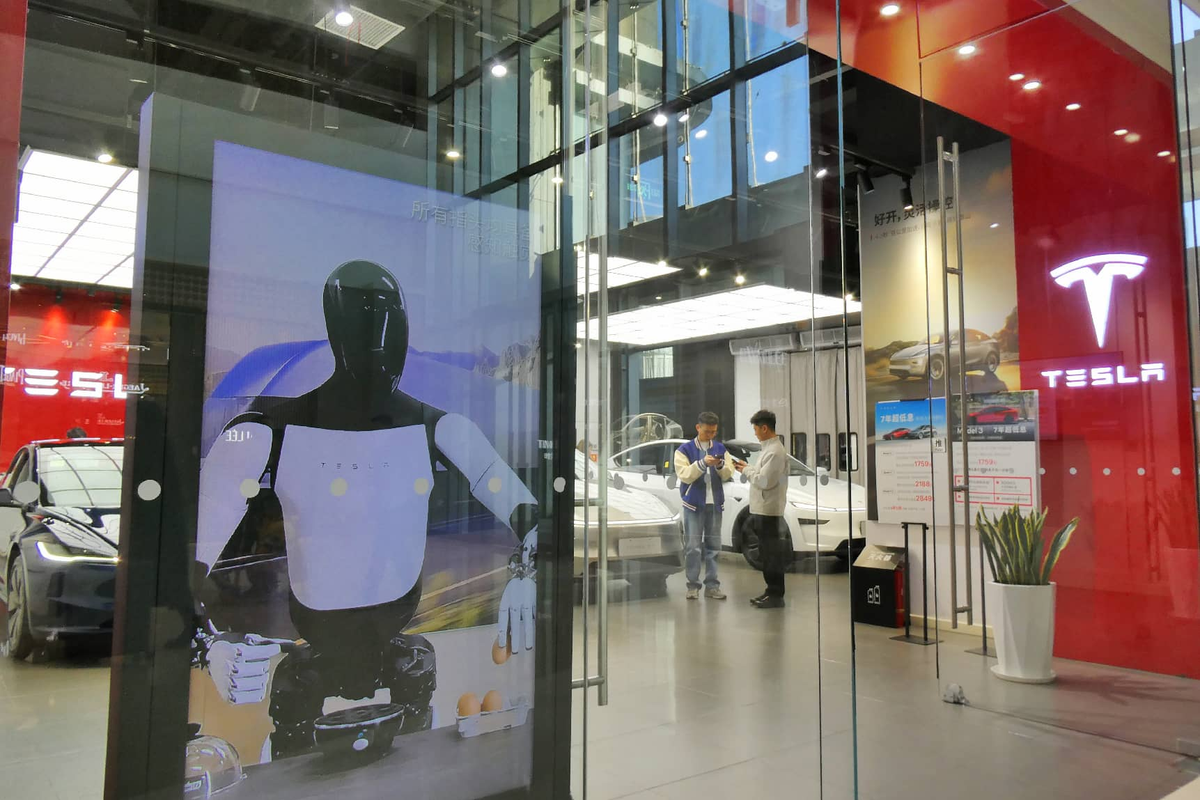
"We have taken note of the action plan, which sets out concrete measures to expand market access, improve investment facilitation, support R&D in China, and strengthen service support. China's continued opening-up will further reinforce companies' confidence in making long-term investments," said Tao Lin, vice president of Tesla.
China has always been one of Tesla's most important markets. Tao Lin noted that the company's presence in China now extends far beyond sales, encompassing manufacturing, R&D, supply chains, charging infrastructure, after-sales services, and energy businesses. Tesla's Gigafactory in Shanghai is a key manufacturing and export hub in its global network, while the Shanghai Megafactory has extended the company's footprint in China beyond electric vehicles to energy products.
A stable, transparent, and predictable institutional environment provides multinationals with the core strength and key safeguard needed for long-term development in China. In recent years, China has deepened reform of its foreign investment management, steadily expanded market access, strengthened fair competition, and supported business development through institutional innovation. By countering external uncertainty with policy consistency, the country continues to strengthen the "Invest in China" brand, providing a stronger policy foundation for multinationals to invest and grow.
"China's complete industrial system, vast market, and continuously improving business environment make it both a stabilizer of global industrial chains and a source of innovation," said Yin Zheng, Schneider Electric's executive vice president for China & East Asia Operations.
Schneider Electric has built a strong manufacturing system and supply chain network in China, including 30 factories and logistics centers and 1,600 supplier partners. It has established a resilient, efficient end-to-end green supply chain, with more than 90 percent of its supply chain in China sourced locally.