How China Is Building the Backbone of Its Modern Industrial System Through Advanced Manufacturing
Driven by technological innovation, smart factories, and green practices, China is rapidly modernizing its industrial sector and establishing advanced manufacturing as the backbone of its economy.
Par Li Xinping, Wang Zheng, Gu Yekai
China is vigorously developing advanced manufacturing, positioning innovation as its primary driver. Characterized by higher technological sophistication and an accelerated transition toward smarter, greener, and more integrated practices, the country is modernizing its production methods while coordinating traditional, emerging, and future industries.
These coordinated efforts are driving Chinese manufacturing toward a comprehensive leap forward, establishing advanced manufacturing as the foundational pillar of a modern industrial system.
At the heart of this transformation lies innovation.
In September, Chinese tech giant Huawei unveiled its second-generation flagship tri-fold smartphone, while Xiaomi released its first mid-fold handset, highlighting fierce competition within the high-end segment.
This confidence stems from domestically driven breakthroughs. In recent years, China has achieved mass production of ultra-thin flexible glass. Measuring just 30 micrometers thick, it can withstand more than one million folds without damage.
By late July, China held 5.74 million valid domestic invention patents, and the number of international patent applications filed under the Patent Cooperation Treaty has ranked first globally for seven consecutive years. To accelerate commercialization, the country is strengthening the linkage between scientific research and industrial application, improving the efficiency of turning innovations into market-ready products.
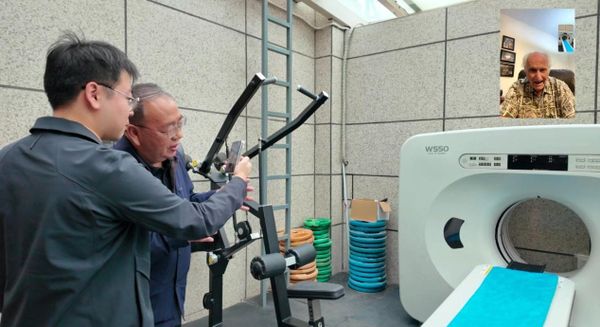
For instance, while computed tomography (CT) imaging has evolved over a century to offer increasingly precise detection, a surge in new energy vehicle production created a bottleneck in battery quality control. Responding to this challenge, Sunwoda Electronic Co., Ltd., in collaboration with Dalian University of Technology, successfully developed high-speed, multimodal CT equipment for online battery inspection, enabling non-destructive testing and boosting evaluation efficiency.
Since the beginning of the year, China has accelerated the development of a full-chain service system to translate scientific and technological advances into practical applications. At the R&D stage, two new national manufacturing innovation centers have been established. Pilot-testing now relies on a national network of 21 top-tier manufacturing platforms and over 1,800 reserve facilities. In the incubation stage, the country has recognized its first batch of 14 excellence-level and 402 standard-level technology business incubators, which have nurtured more than 425,000 enterprises and teams.
Reflecting these gains, the World Intellectual Property Organization's Global Innovation Index reports that China hosts 25 of the world's top 100 innovation clusters, leading globally for the fourth consecutive year.
What distinguishes an advanced manufacturing facility from a conventional factory?
Consider Lenovo's production hub in Shenzhen, Guangdong Province, which processes over 5,000 daily orders, 60 percent of which are highly customized across more than 50 product lines and 20,000 configurations. Despite this complexity, the 100-meter production line operates with remarkable agility. Equipped with machine-vision-guided robotic arms, it performs precision assembly at millimeter-level accuracy and switches between product models with minimal downtime, with 90 percent of orders shipping within 24 hours.
What makes advanced manufacturing "advanced" lies in the modernization of production methods.
"Compared with traditional manufacturing, advanced manufacturing has generally shifted toward digitalized, intelligent, lean, and green production," said Li Yan, deputy head of the industrial economy research department at the Development Research Center of the State Council.
China now operates 35,000 basic-level smart factories, more than 8,200 advanced-level smart factories, and over 500 excellence-level smart factories. Furthermore, more than 30 percent of manufacturing enterprises above a designated size with annual revenues exceeding 20 million yuan (about $2.98 million) apply artificial intelligence technologies.
Global industrial competition is no longer limited to production capacity; it now encompasses integrated manufacturing and service ecosystems. Chinese heavy machinery manufacturer Xuzhou Construction Machinery Group, for example, expanded beyond equipment sales to deliver comprehensive green mining solutions, securing major contracts with global firms such as BHP.
Similarly, Haier Smart Home provides tailored smart appliance packages, with revenue from scenario-based applications continuing to grow.
"Going forward, we will promote deeper integration between advanced manufacturing and modern services, accelerate the development of new models and new forms of business such as platform-based design and personalized customization, and advance service-oriented manufacturing," said Xin Guobin, vice minister of the Ministry of Industry and Information Technology.
Ultimately, advanced manufacturing optimizes the broader industrial structure.
Consider an embroidery machine adapted for embodied intelligence: by interweaving sensing yarn and base yarn, it knits embodied intelligence data gloves in a single piece, enabling more precise capture of hand motion data.
"The essence of advanced manufacturing is comprehensive innovation and upgrading across the manufacturing sector," Li noted. This encompasses both entirely new industries created by technological breakthroughs and traditional sectors comprehensively transformed through advanced technologies, processes, and management methods.
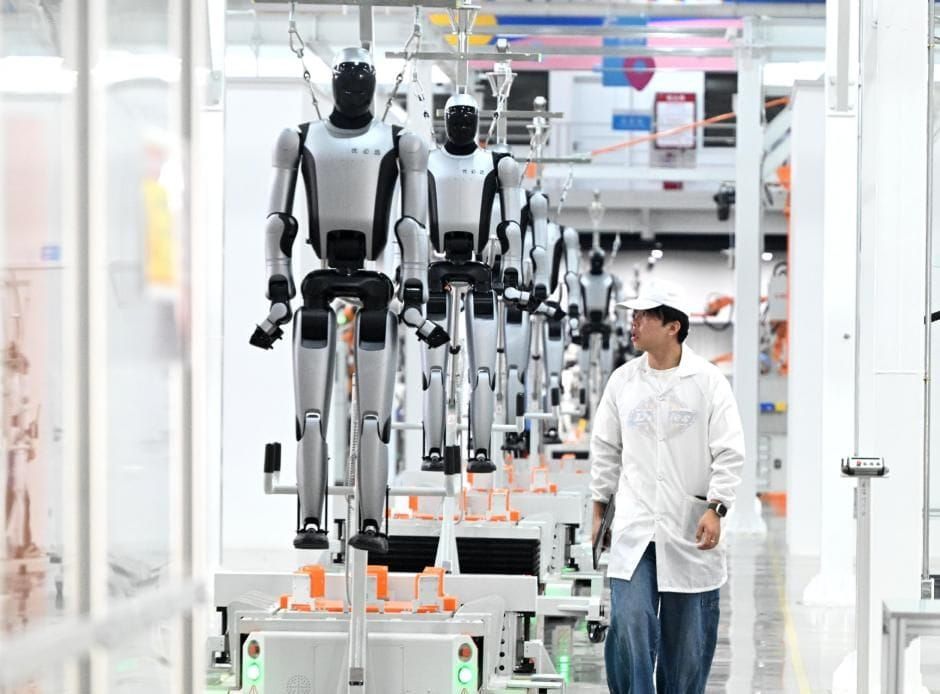
Driven by this momentum, traditional industries are experiencing renewed vitality. In the first half of the year, sales revenue in food manufacturing, garment manufacturing, and papermaking grew 11.6 percent, 9.2 percent, and 8.9 percent year on year, respectively. Simultaneously, emerging and future industries are expanding rapidly: China accounts for nearly 70 percent of global sales of quadruped robots and more than half of the world's 400 humanoid robot models, while the preclinical R&D cycle for new targeted anticancer drugs has been shortened by 40 percent.
As China accelerates its advanced manufacturing strategy, it reinforces its commitment to industrial excellence and cements the sector as the backbone of a modern economy.